The cost of under-cleaning
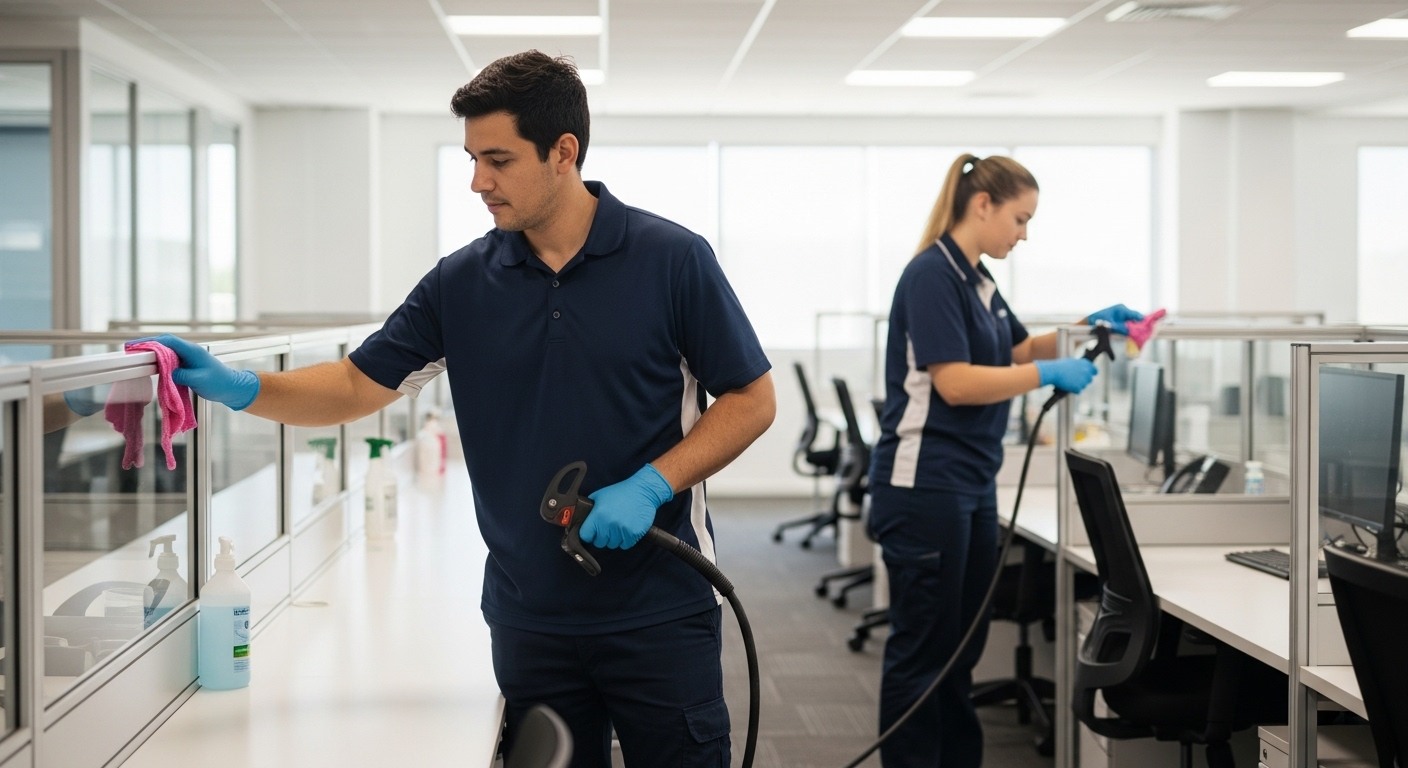
In office settings, under-cleaning shows up first in amenities, entries, glass, and kitchenettes. Staff stop noticing the gradual decline, but clients and visitors usually see it immediately.
Darwin offices also have to manage wet-season entry grime, build-up humidity, dry-season dust, and high-contact hygiene in a way that feels consistent rather than reactive. A program that looked fine in one part of the year can feel underscoped a few months later.
What really decides frequency
The biggest drivers are staff count, visitor traffic, washroom use, food preparation, and whether the office sits inside a larger building with shared rules. A five-day office with a public reception desk needs a very different rhythm from a quiet consulting suite with mostly scheduled appointments.
That is why the best programs combine daily or near-daily essentials with weekly detail work and less frequent specialist tasks such as carpet care, window cleaning, and high dusting.
Why checklists matter more than generic promises
A written scope gives managers something concrete to review and improve over time. It also makes onboarding new cleaners, adding shifts, or adjusting washroom consumables much easier than relying on verbal expectations alone.
Most cleaning issues in offices are not caused by bad intent. They come from vague scopes that do not reflect the real traffic pattern of the workplace. Clear checklists fix that faster than sales language does.